Our Laying Hens Are Back On Pasture
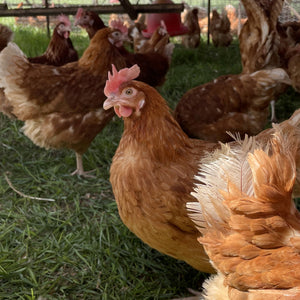

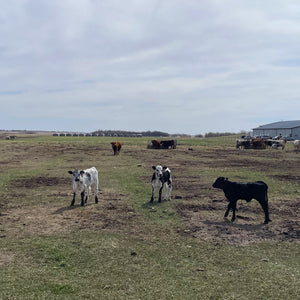
Now that the weather has begun to finally warm and become more consistent, we are starting to move our laying hens back outside onto pasture for the season. As the hens begin grazing on fresh grasses, weeds, bugs and grubs again, you will naturally start to see changes in the colour of the egg yolks.
Every hen forages a little differently, so each yolk may be a slightly different shade of yellow depending on what that particular hen has eaten. Throughout the summer and fall, yolk colours will continue to naturally change as pasture conditions change with the seasons, the types of grasses and weeds available shift, and the amount of rainfall affects pasture growth. These yolk colour variations are a normal and expected part of eggs produced by hens raised outdoors on pasture without artificial yolk colourants.

How We Raise Our Hens
In the spring, summer and fall our laying hens are pasture raised in outdoor movable shelters that are moved every day onto fresh grass. While on pasture the hens receive certified organic feed, clean water, nesting boxes and perches, while being able to express their natural behaviours such as scratching, pecking, dust bathing and foraging. In the winter the hens are moved indoors into warm barns with natural sunlight, clean bedding and easy access to feed and water.

High Quality Nutritional Feed with No Yolk Colorants
Year round we focus on feeding a balanced certified organic ration. Our focus is on nourishing the hens properly so they can produce healthy eggs, not trying to achieve a certain shade of yolk.
Yolk colour comes from carotenoids naturally found in plants and feeds. Different grains and plants contain different levels of these pigments, and colourants can also be artificially added to feed to create a specific and consistent yolk colour.
We add dried organic alfalfa meal to our hens’ feed year round so they continue to receive the nutritional benefits of greens even when fresh pasture is limited due to drought, early spring conditions or winter weather. While dried alfalfa has a positive effect on nutrition it has a small effect on yolk colour, as the natural drying process greatly reduces the carotenoids that affect yolk colour.
Egg yolk colourants create the unrealistic expectation that every egg should look the same year round regardless of season or how the hens are raised. In a natural pasture-based system like ours, uniform yolk colour is neither realistic nor our goal.
During the summer months yolks are often brighter from fresh pasture with naturally higher carotenoid levels. In winter, yolks are naturally paler. Sometimes you may even see different shades of yolk within the same carton because each hen eats a slightly different variety and amount of grasses and weeds. These natural variations are expected.
Yolk colour does not indicate nutritional value, bird health, living conditions or flavour. Conventionally raised caged hens can also produce darker yolks if colourants are added to the feed. Taste is influenced by what the hen eats, not by yolk colour itself.
Taste is influenced by what the hen eats, not by yolk colour itself. As the saying goes, we eat with our eyes first, so people often assume a pale yolk is bland and a darker yolk is more flavourful before even tasting the egg.
Our focus is not on achieving a particular shade of yellow. Our focus is on raising hens in a way that supports their health and wellbeing, humanely and organically, with access to pasture when weather allows, warm shelter in winter, balanced organic feed and respectful daily care. We strive to raise an organic product without unnecessary additives or chemicals. By embracing the natural colour variations of our egg yolks, we can focus on what matters most: the health and wellbeing of our hens and producing healthy eggs naturally.
Your Farmers,
Ron, Sheila and Family
- Sunworks Farm